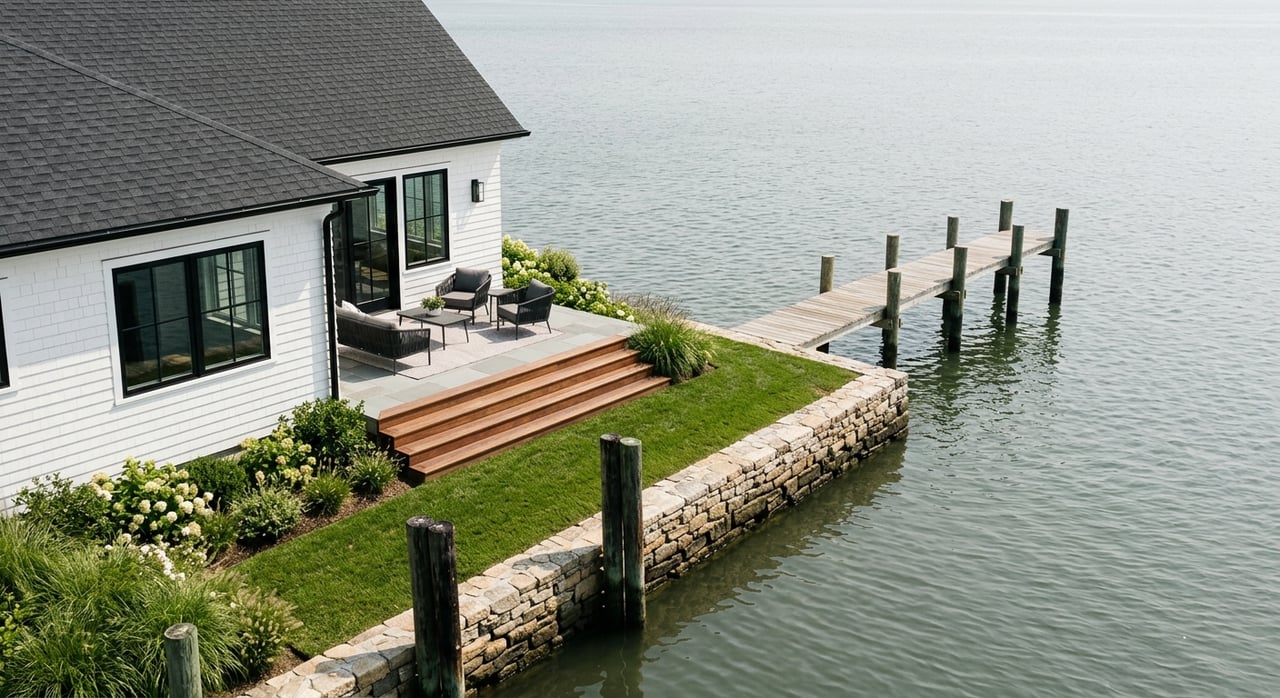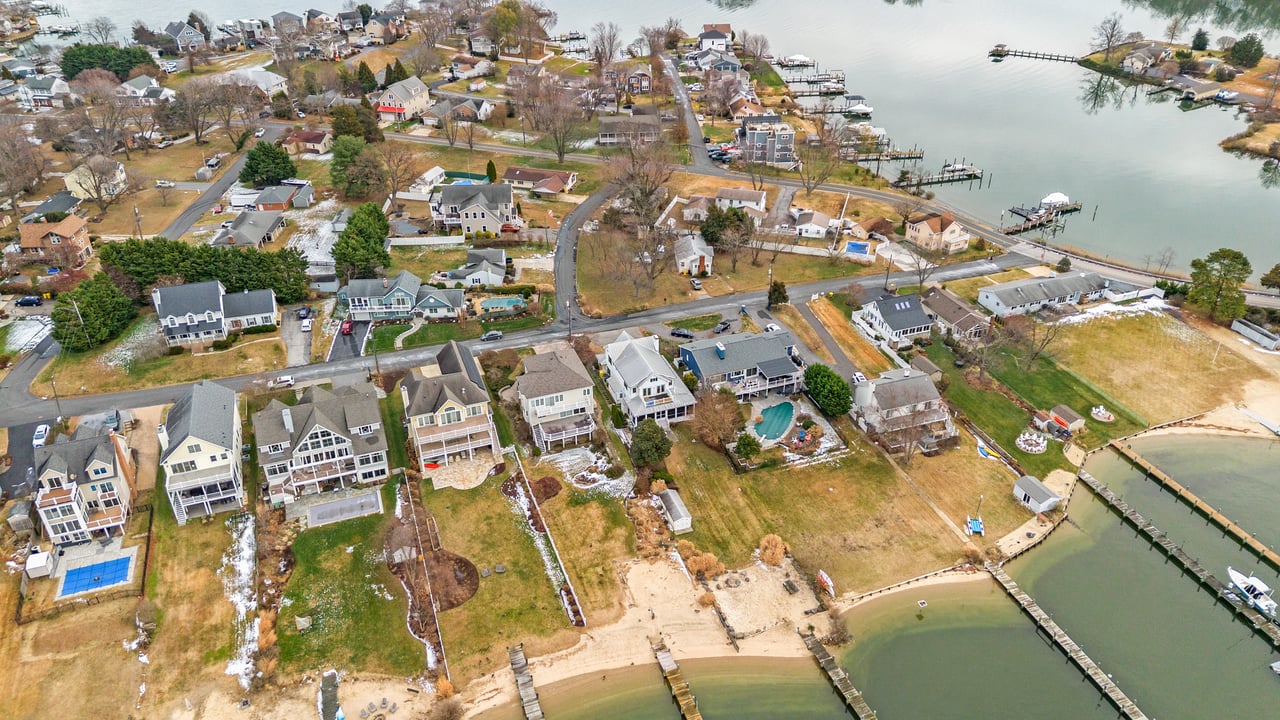
Scroll through listings in Severna Park long enough and you will notice something odd. The word "waterfront" shows up constantly, and so does "water-privileged," often in the same paragraph, sometimes describing the exact same kind of lot. Agents and homeowners use the terms almost interchangeably in marketing copy. Lenders, appraisers, and title companies do not. One describes a deed that includes riparian rights: the legal ability to install a pier, launch a boat, or make reasonable use of the shoreline because you own it. The other describes a home that sits inland from the water but belongs to a community with a shared beach, a communal pier, or a boat ramp that every homeowner has access to but nobody individually owns.
That distinction used to matter mostly for financing and appraisal purposes. Lately it matters for a bigger reason. The data on Severna Park's highest price tier shows that the growth engine has quietly shifted away from true waterfront and into the water-privileged category, the one buyers have historically treated as the consolation prize.
Two Different Products Wearing the Same Word
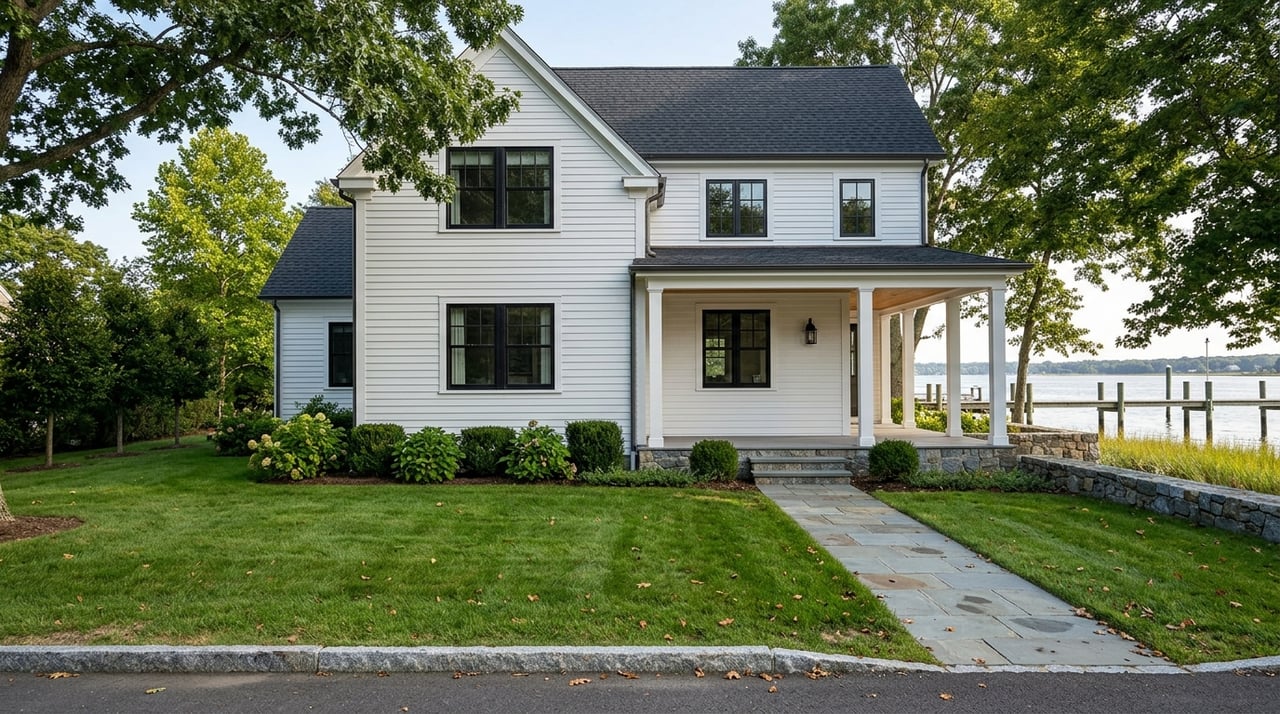
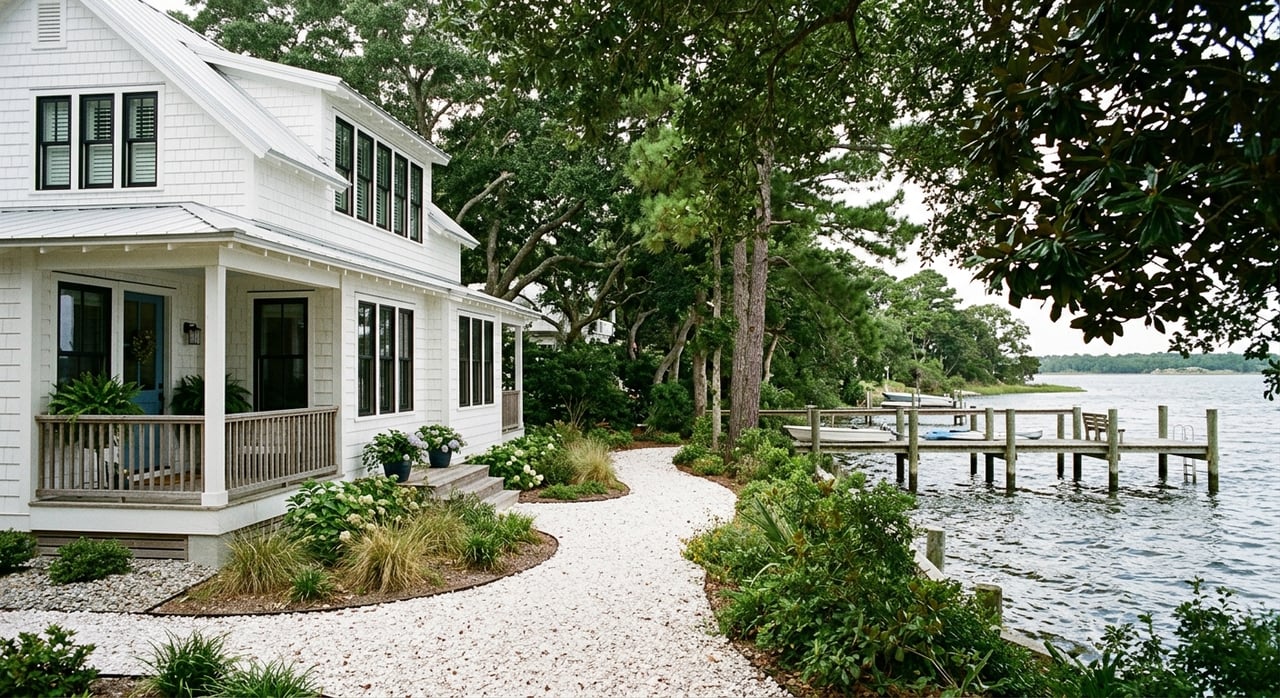
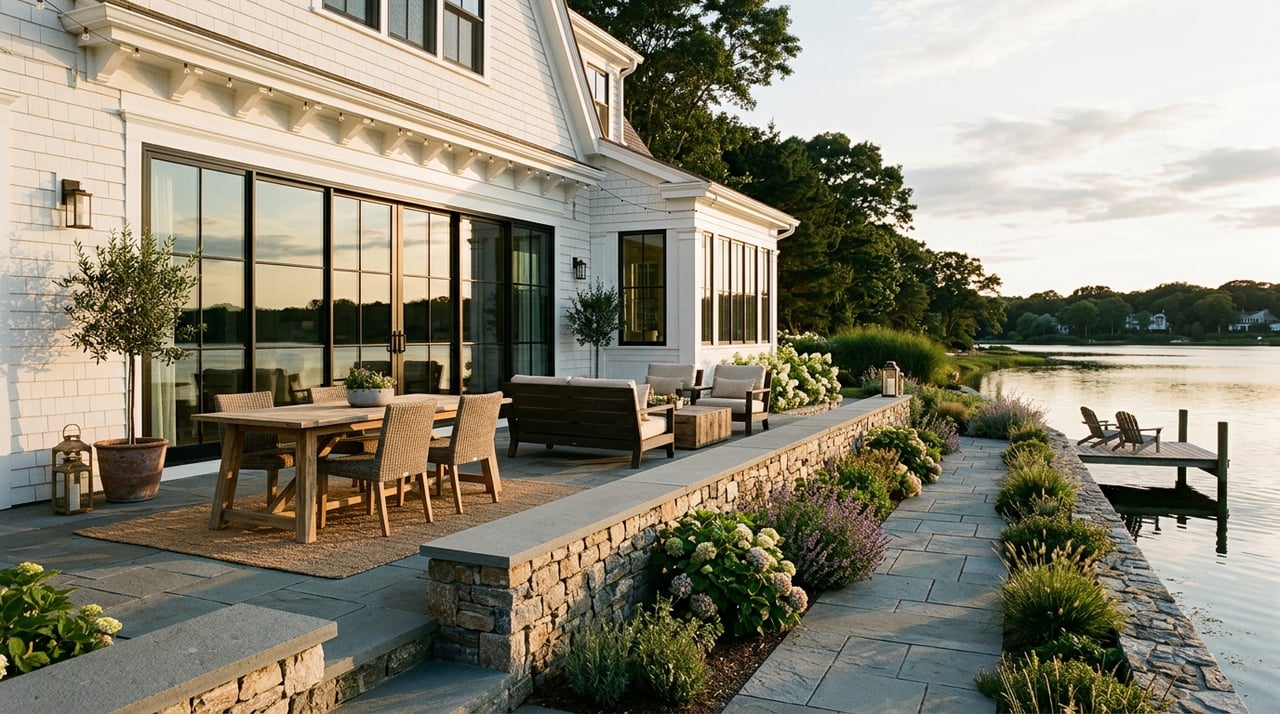
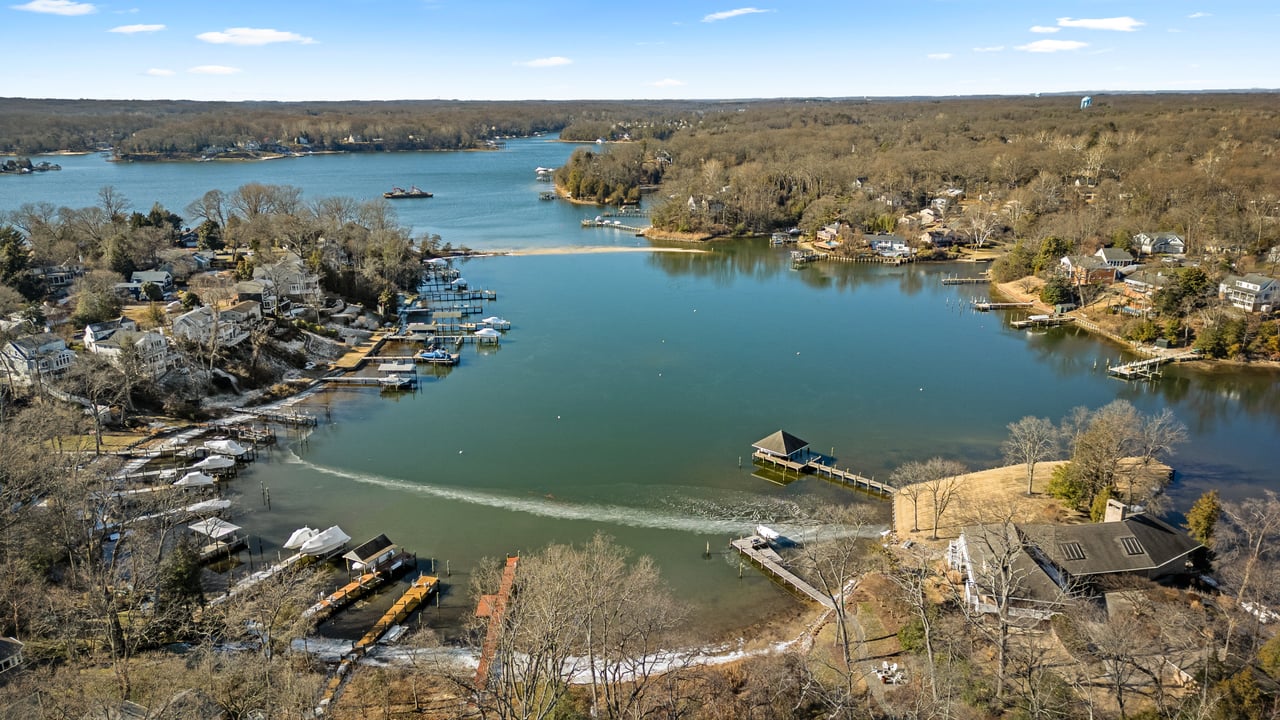
True waterfront in Severna Park is rare enough that it behaves like its own micro-market. Looking at the ten years through 2024, an average of only 31 waterfront homes sold per year across the entire town, according to research published in the Severna Park Voice. That scarcity shows up everywhere in the numbers.
| True Waterfront, 10-Year Average Through 2024 | Figure |
|---|---|
| Homes sold per year | 31 |
| Average days on market | 69 |
| Average sale price | $1.3 million |
| Cash purchases | 26% |
| Average year built | 1968 |
| Highest sale in the period | $4.95 million (5 Boone Trail) |
The average build year of 1968 tells its own story. Most of the true waterfront stock in Severna Park is fifty to eighty years old, built in an era when lot lines still allowed direct shoreline access on modest footprints. Almost nobody is creating new waterfront inventory. What exists today is largely what will exist for the foreseeable future, which is exactly why the category trades slower (69 days versus a much faster pace for the rest of the market) and commands a heavy cash share at 26%.
Water-privileged is the much larger category built to answer the same desire without the same scarcity. A homeowner in a water-privileged community does not own the shoreline. They own a house that comes with membership in a community that collectively maintains a beach, a pier, boat slips, or a ramp. It is a shared amenity, not a private right, and it is the more common way most Severna Park residents actually reach the water.
What Water-Privileged Actually Buys You
The amenities vary meaningfully from one community to the next, which matters if you are shopping by lifestyle rather than by legal category alone.
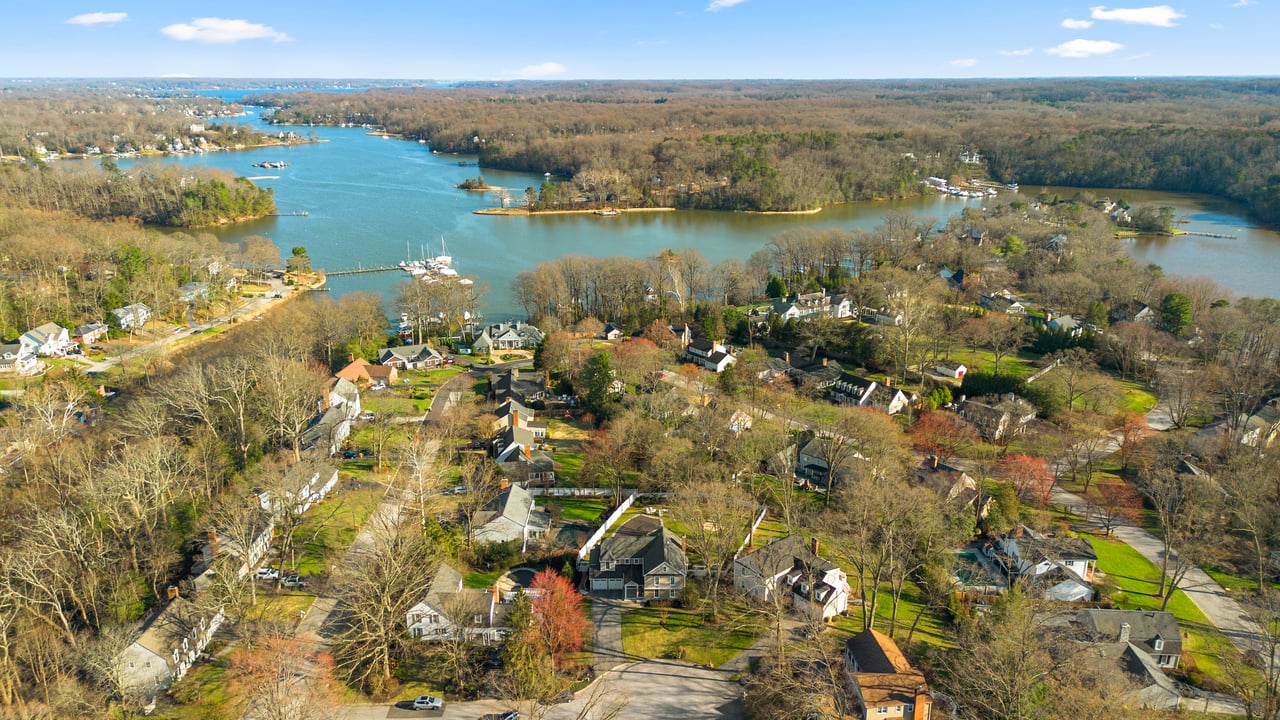
On the Severn River side, Olde Severna Park offers a sandy beach, two piers, a boat ramp, piling slips, moorings, and a kayak rack, with the option to join the Severn River Swim Club.
On the Magothy side, Magothy Beach sits on the peninsula formed by the Magothy River and Cattail Creek, with its own beach and a pavilion, and Hamilton Harbor Marina located inside the community. Arundel Plaza, whose water access on Cattail Creek also leads to the Magothy River, provides a boat ramp, boat slips, boat racks, a pavilion, and a playground. Berrywood, at the end of Cattail Creek, and Magothy Forest, tucked along Old Man Creek, both describe themselves as water-privileged, with Magothy Forest offering a fishing pier and walking trail rather than a full marina setup. Cape Arthur, on the Magothy River, is marketed directly as a water-privileged beach community with a private beach, piers, and the Lydia E. Giddings Memorial playground.
Manhattan Beach is worth calling out on its own, because it illustrates the labeling confusion at the heart of this whole topic. One community guide describes it flatly as "a waterfront community." The Manhattan Beach Civic Association's own materials describe it as water-privileged, with a boat ramp and several community beaches spread across Cypress Creek, Dividing Creek, and the Magothy River. Both descriptions are technically defensible, since some lots within the community do carry direct waterfront rights while most do not. That is precisely the kind of nuance a buyer needs clarified before writing an offer, not after.
The Shift in the Million-Dollar Tier
Here is the part that runs against what most buyers assume walking in. From 2015 through 2019, homes selling above $1 million were rare in Severna Park and Arnold, representing just 3% of total home sales in the area. Of the 156 homes that closed above that mark during those five years, 71% were waterfront, according to the Severna Park Voice's analysis of the local million-dollar tier. Waterfront was, for that stretch, effectively synonymous with the top of the market.
Then the picture flipped. From 2020 through 2024, sales above $1 million grew 137%, and waterfront made up less than half of those sales. The million-dollar tier got much bigger, and the growth came disproportionately from water-privileged homes, not from the shoreline itself.
The mechanism is not mysterious once you look at the supply side. There simply are not many new homes being built in Severna Park and Arnold, and demand has kept outpacing what little supply exists. True waterfront cannot expand to meet that demand because the shoreline is fixed. Water-privileged inventory, while still limited, has more room to grow in price because it includes a much larger set of homes and lots. When local buyers who want a boat, a beach, and a stable community can not find (or can not afford to wait for) one of the roughly 31 waterfront homes that trade each year, they bid up the water-privileged alternative instead. That bidding pressure is what pushed water-privileged into the same price bracket that used to belong almost exclusively to the water's edge.
Who's Actually Buying at the Top
A common assumption is that this kind of luxury growth gets driven by out-of-town money, buyers relocating from Washington, D.C., Philadelphia, or New York chasing a Chesapeake lifestyle. The data says otherwise. The primary buyer of a Severna Park waterfront home is overwhelmingly a local move-up buyer: a resident raising school-age children, established in a stable local career, already rooted in community activities, often already a boat owner, and carrying significant equity from a previous home. This is a market driven by people who already live here trading up, not new arrivals discovering the area for the first time. That local-buyer profile also helps explain why water-privileged communities absorbed so much of the recent price growth. These are buyers who know the neighborhoods, know which communities have a ramp and which have a marina, and are willing to pay for shared water access rather than wait years for a true waterfront listing to surface.
The Tax Myth That Refuses to Die
One friction point comes up constantly with buyers comparing waterfront to water-privileged homes: the assumption that waterfront properties carry some kind of special "waterfront tax." They do not. Waterfront homes in Severna Park pay property taxes at the same rate as non-waterfront homes, a point addressed directly in a recent Severna Park Voice property tax explainer. What does trip up new owners is the billing calendar itself. Anne Arundel County's property tax year runs July 1 through June 30, not the calendar year, and bills can be paid in full or split into semi-annual payments. Neither of those quirks has anything to do with owning a shoreline. They apply the same way whether the home sits on the water or three streets back from it.
A Few Questions Worth Settling Before You Shop
Does a water-privileged deed include any of the shoreline itself? No. The homeowner has access rights through community membership, not private ownership of the waterfront parcel. The beach, pier, or ramp belongs to the community as a whole.
Why did water-privileged prices catch up to waterfront in dollar terms if the amenities are shared rather than private? Limited new construction across Severna Park and Arnold, combined with a fixed supply of true waterfront lots, pushed local move-up buyers toward the next-best option in large enough numbers to drive water-privileged pricing into the same bracket that waterfront used to dominate on its own.
Is there a quick way to tell which category a specific listing falls into? The listing description alone is not always reliable, as the Manhattan Beach example shows. Confirming riparian rights versus community access requires checking the deed and community association documents, ideally before an offer goes in rather than during due diligence.
If you are comparing homes across Severna Park's water communities and want a clear read on which category a specific address actually falls into, and what that means for price and financing, David Orso and the ORSO. Team, recently voted Best Real Estate Agent in the 2026 Severna Park Voice Best Of awards, can walk you through the distinction property by property. Contact Us to get started.